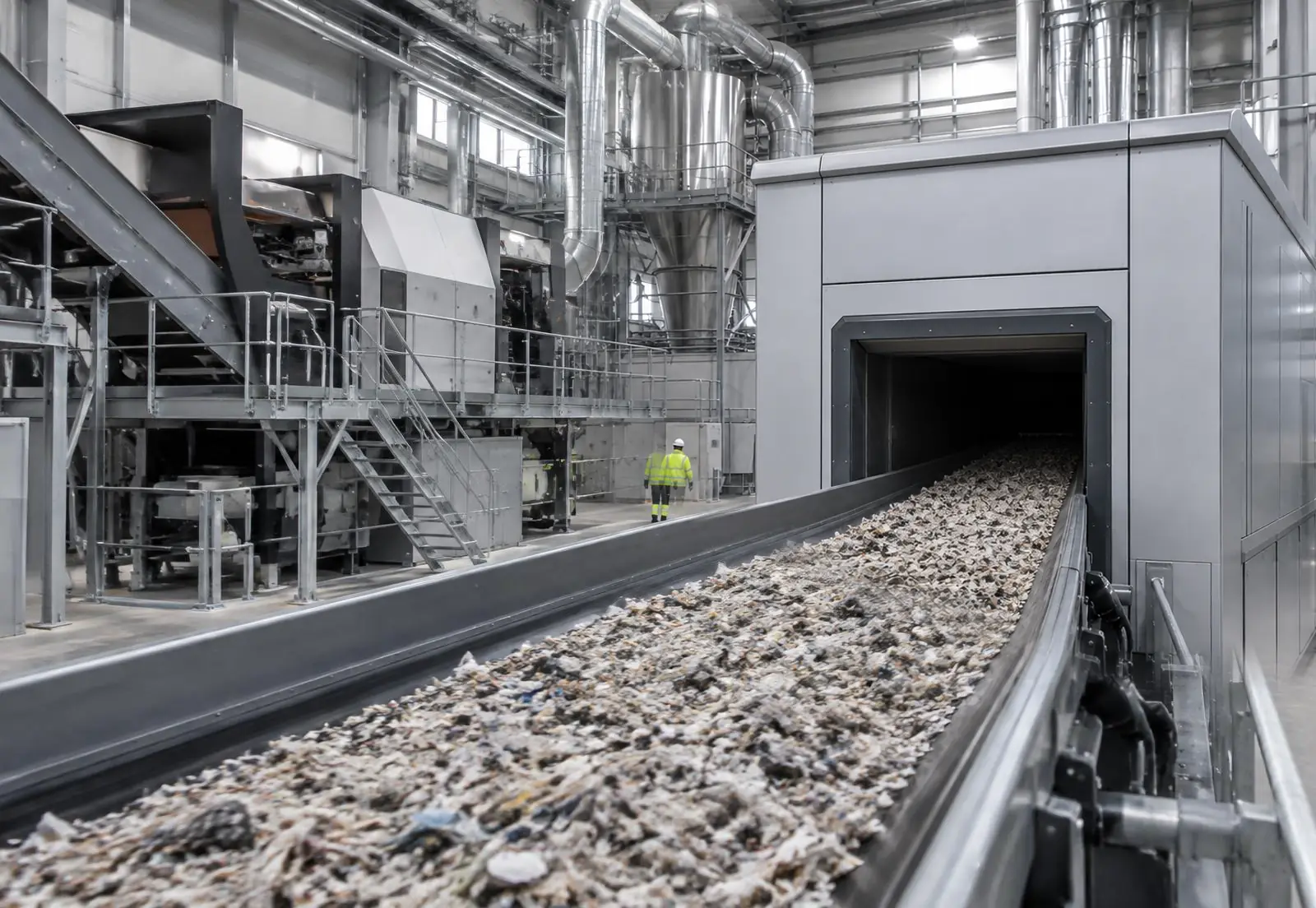
Co-processing is a plant-specific engineering decision
Cement kilns can use suitably prepared residual material as part of their thermal input. The relevant measure is thermal substitution rate: the share of thermal energy supplied by alternative fuels, not the share by mass.
A suitable route depends on where material enters the process, the combustion environment, the kiln and preheater configuration, clinker chemistry and the site’s environmental permit. A specification that works at one plant is not automatically transferable to another.
RDF, SRF and the receiving specification
RDF is a broad commercial description. SRF is prepared and classified under a defined framework, but an SRF class is not the complete purchasing specification. The receiving cement plant still needs limits and procedures for parameters relevant to its process.
See the SRF supply approach, or read the EN ISO 21640 classification guide.
Carbon claims require measured inputs
Replacing part of a coal input with RDF does not make the whole process carbon neutral. Fossil CO₂ impact depends on energy substitution, the RDF’s fossil and verified biogenic carbon fractions, and the accounting framework applied by the plant.
Compare coal and RDF in cement kilns without a blanket low-carbon claim.