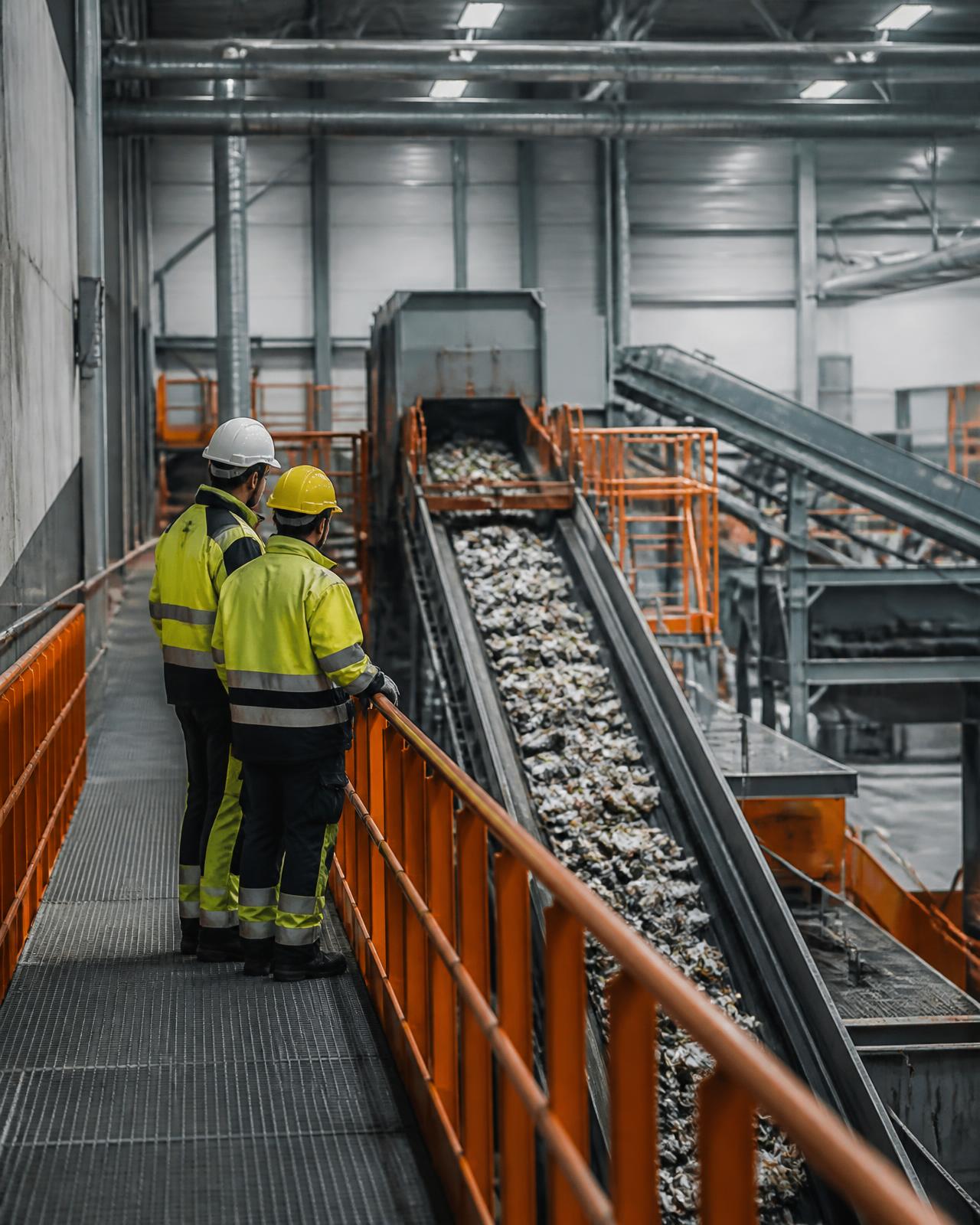
Where energy recovery fits
The European waste hierarchy prioritises prevention, preparation for reuse and recycling. Other recovery, including energy recovery, follows those options and sits above disposal.
That order matters: material suitable for recycling should not be redirected simply because it can burn. Energy recovery addresses residual fractions that remain after practical recovery of recyclable material.
Energy from residual waste
Permitted facilities can recover heat and electricity from residual waste. Combined heat and power and district-heating connections can improve the use of the energy produced, but performance differs by facility and local energy system.
Industrial co-processing can also use suitably prepared alternative fuels. Acceptance depends on composition, consistency, plant design and permit conditions.
Why preparation matters
Stable fuel quality supports safe handling, predictable combustion and compliance at the receiving facility. Producers and suppliers therefore need representative sampling, clear documentation and control of physical and chemical characteristics.
Transport format matters too. Loose, baled and walking-floor deliveries each place different demands on storage, unloading and scheduling.
A changing policy context
Carbon pricing, waste-shipment rules and recycling policy are changing the economics of residual waste across Europe and the UK. Buyers and suppliers should treat policy announcements and enacted obligations separately, and review routes as rules develop.