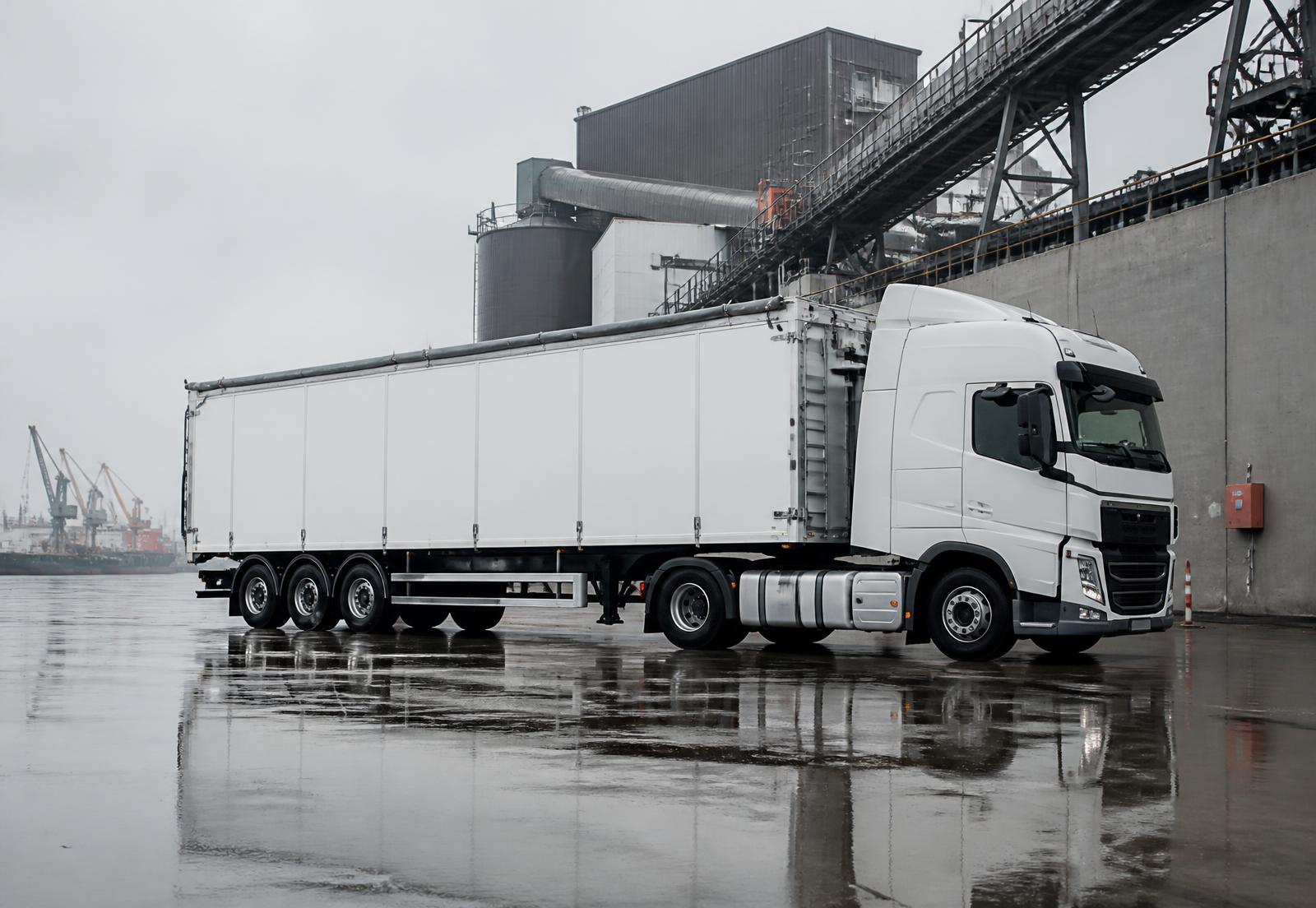
Why this matters for RDF trade
RDF produced from mixed municipal waste—European waste code 19 12 10—is subject to the prior written notification and consent procedure under Regulation (EU) 2024/1157. Since 21 May 2026, that procedure runs through DIWASS: the notification, the authorities’ questions and consent decisions, and the movement documents all live in one shared digital record.
Digital handling does not change the underlying legal tests. The waste code, the receiving facility’s permit, the treatment operation and the shipment route must still be correct; DIWASS changes how they are submitted, tracked and evidenced.
Registration comes first
No party can be typed into a notification by hand. The notifier, producer, person arranging the shipment, every carrier, the consignee and the receiving facility must each be registered in DIWASS before the document is prepared—otherwise they cannot be selected and the notification cannot be submitted. One unregistered partner blocks the whole chain.
Access method varies by Member State. Under Commission Implementing Regulation (EU) 2025/1290, each competent authority declared whether operators in its territory use the DIWASS website, a local system, or connected software—and the choice can differ for notifications, Annex VII documents and pre-consent communication. Check your own authority’s declaration before assuming a single route.
The shipment lifecycle in the system
DIWASS links documents and enforces their order. A movement document can only be generated once all relevant competent authorities have consented to the notification. Key details—consignee, receiving facility, waste codes, treatment operation—are carried over from the consented notification and cannot be changed on the movement document. Only carriers named in the consented notification can be selected.
If a consent is withdrawn or expires, new movement documents can no longer be generated. Carriers, the consignee and the receiving facility each complete their parts of the movement document, and a certificate confirming completion of the treatment operation closes the cycle, using the template set by Commission Delegated Regulation (EU) 2024/2571. Access to each document is limited to the parties involved in that shipment, according to their role.
A practical preparation checklist
Most shipment problems under DIWASS are administrative, not technical: an unregistered carrier, a mismatched waste code, or a facility whose registration does not match the notification. The checklist below reflects the system’s published rules.
| Step | Why it matters |
|---|---|
| Register your operator and each site in DIWASS | Unregistered parties cannot be selected on any document |
| Confirm every chain partner is registered | One missing carrier or facility blocks submission |
| Confirm your access method with your competent authority | GUI, local system or software can differ by Member State |
| Align contracts with notification data | Waste codes, facility and operation are locked after consent |
| Keep sampling and quality documentation ready as attachments | Authorities review quality evidence alongside the notification |
| Plan for digital Annex VII from 1 January 2027 | The paper transition for green-list waste ends 31 December 2026 |
Where quality fits
DIWASS governs shipment legality, not fuel quality. Classification under EN ISO 21640, the receiving plant’s acceptance specification and representative sampling remain separate checks, agreed commercially and evidenced in the notification’s attachments.
For RDF and SRF moving from the Baltic region to European receivers, the strongest position is both sides in order: a technically specified and sampled fuel, and a DIWASS-ready chain where every party is registered before the first notification is drafted.