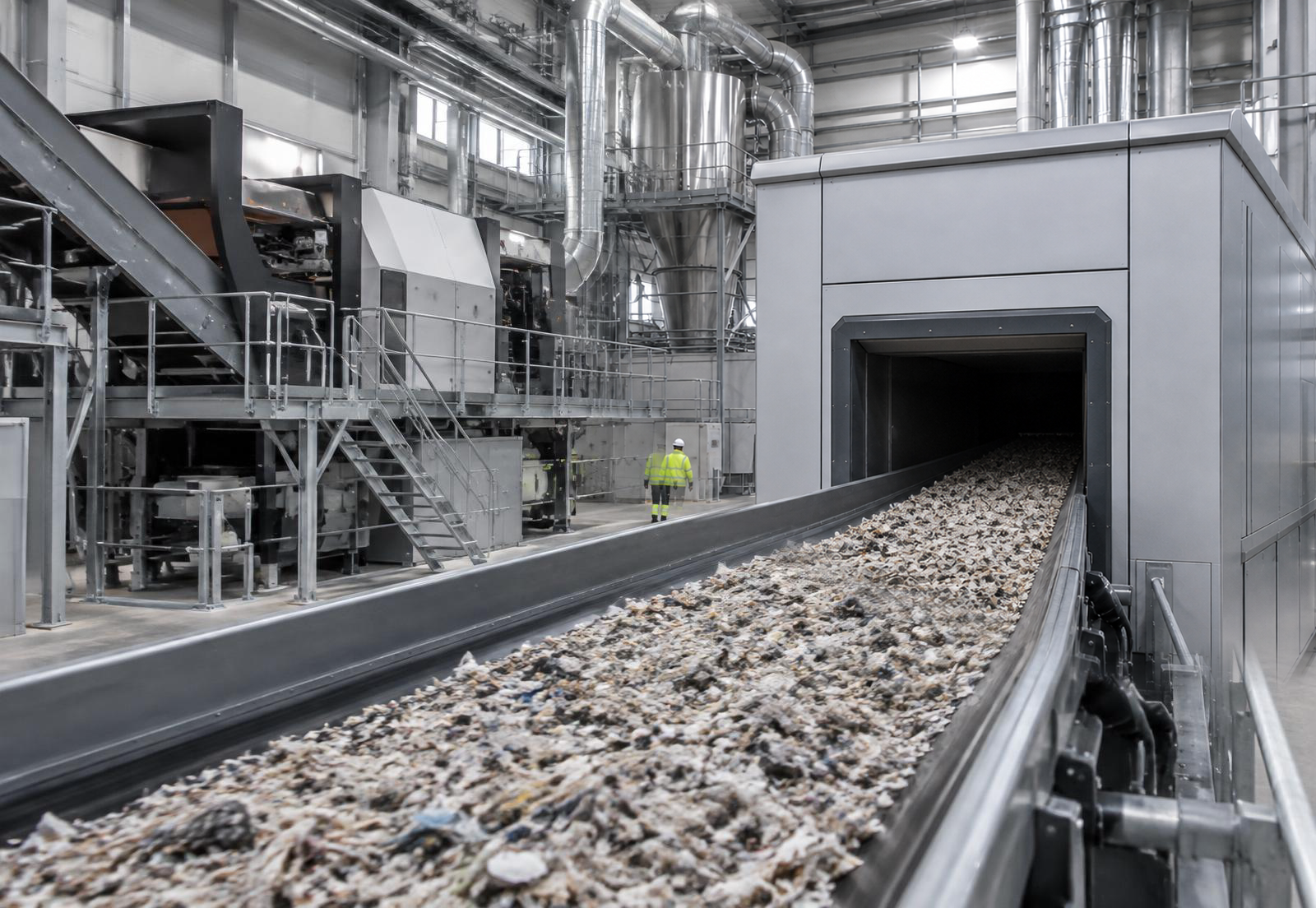
From broad category to specified fuel
Solid recovered fuel, or SRF, is produced from non-hazardous waste to a defined classification and specification. In practice, buyers still need contract-specific parameters and a clear acceptance process.
The distinction between RDF and SRF is important in technical discussions, but terminology and regulatory treatment should always be checked for the jurisdiction and intended outlet.
Industrial use depends on fit
Recovered fuels can substitute part of the conventional fuel input in suitable permitted industrial processes. The receiving plant considers energy value, ash, moisture, chlorine, particle size and other parameters that affect operation and emissions control.
A useful fuel is not simply combustible. It must be prepared, documented and delivered in a form that fits the process.
A market shaped by carbon and circularity
Industrial decarbonisation, carbon pricing and tighter waste rules are changing demand and route economics. At the same time, recovery should not draw material away from viable reuse or recycling.
The durable opportunity is therefore specification-led: matching genuinely residual material with a technically and legally appropriate user.