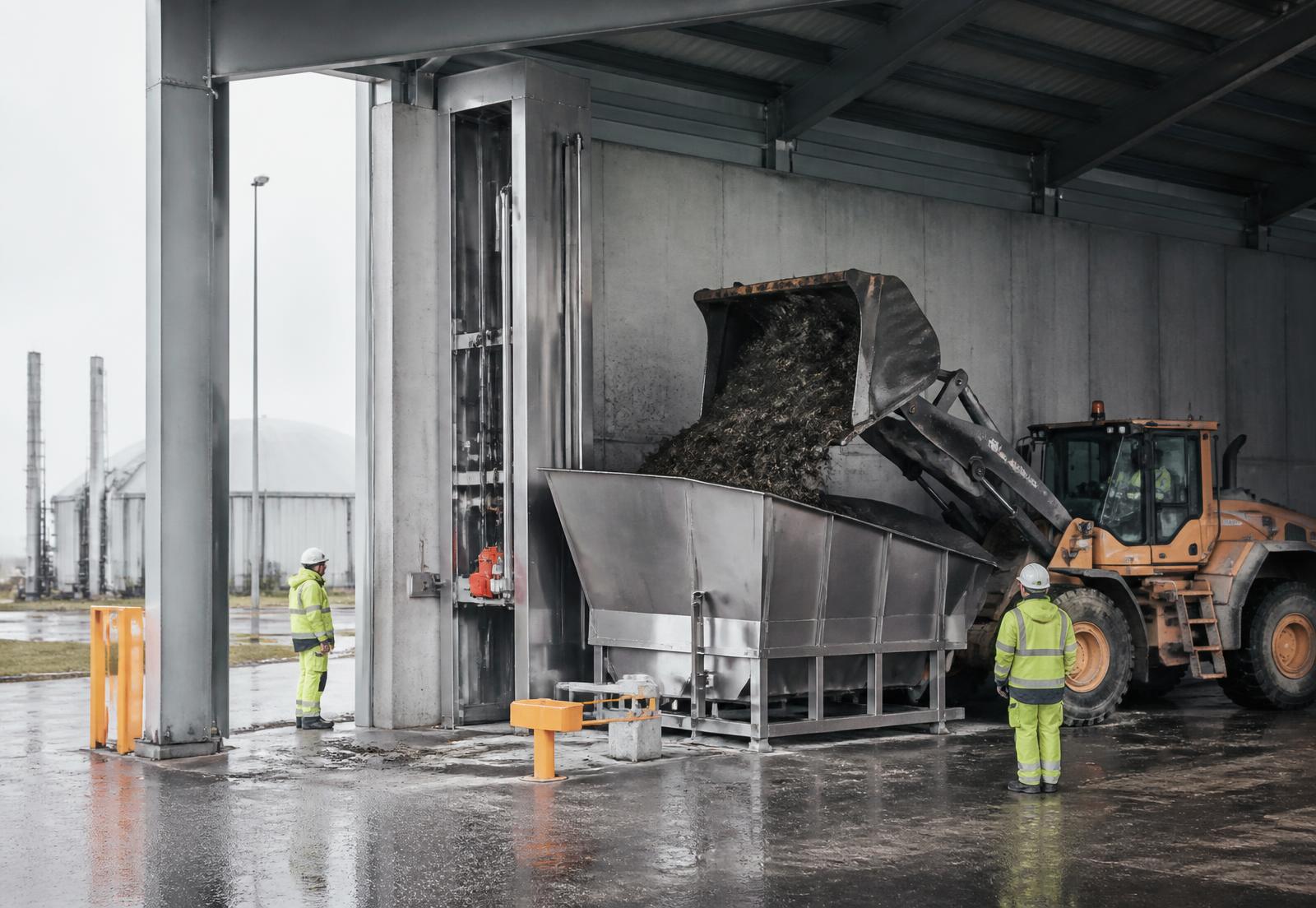
Different materials, different systems
Biogas feedstocks are organic materials suitable for anaerobic digestion. Woodchip biomass is a solid fuel used in suitable heat and power applications. Grouping them under renewable energy should not obscure their very different storage, transport and acceptance needs.
Each receiving process sets its own requirements, and regulatory status can differ by material source and intended use.
Biogas feedstock considerations
A biogas operator may assess dry matter, organic content, contamination, nutrient balance, seasonality and handling characteristics. Storage stability and delivery rhythm can be as important as headline gas potential.
Source information matters. Food-production residues, agricultural materials and other organic streams can follow different controls.
Woodchip biomass considerations
Woodchip buyers commonly consider origin, particle size, moisture, ash and contamination. Storage design, fire prevention, screening and walking-floor logistics influence the delivered result.
Where material is legally waste rather than a product, the applicable waste rules continue to matter even if it has useful energy content.
Match first, move second
The practical sequence is to characterise the stream, identify an appropriate receiving process, confirm legal status and acceptance, then build the transport plan. That avoids moving material toward an outlet that cannot use it.